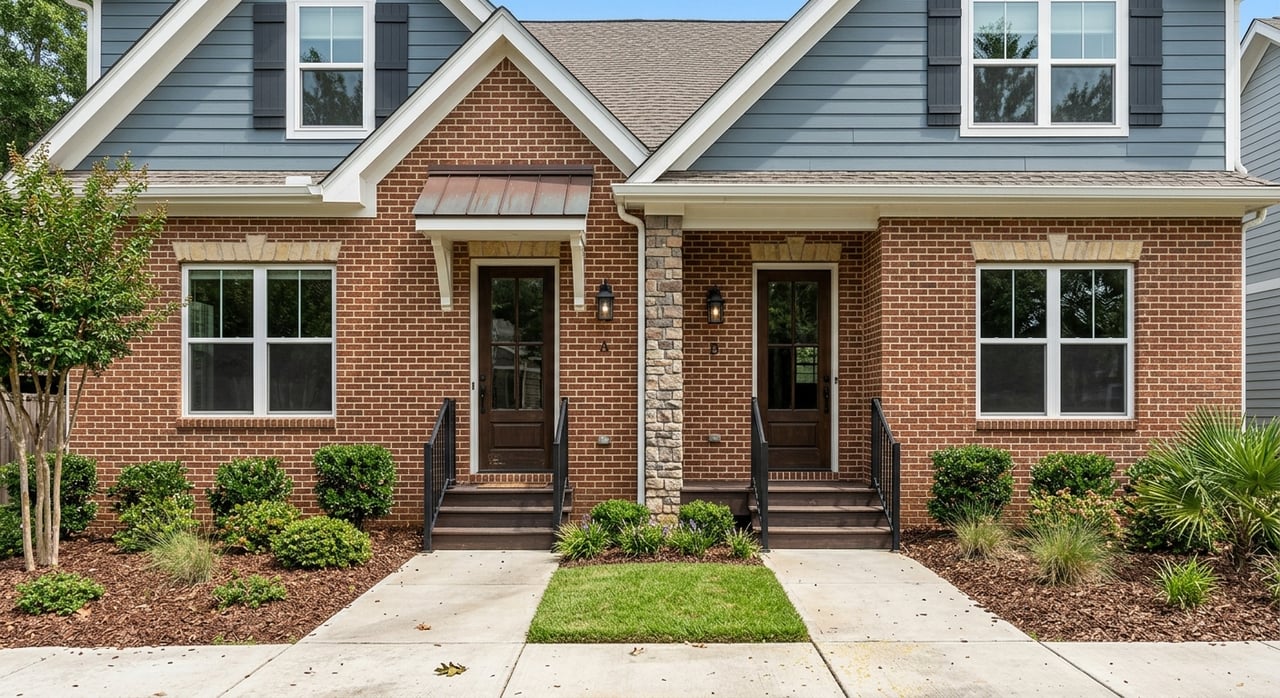
Townhome vs House in Baytown: Find Your Best Fit
July 16, 2026
July 16, 2026
Trying to choose between a townhome and a single-family home in Baytown? It is a common question, and the right answer depends on how you want to live day to day. If you are weighing budget, upkeep, privacy, yard space, or location, a side-by-side look can make the choice much clearer. Let’s dive in.
In Baytown, this decision is shaped by more than personal taste. The city’s planning documents note a limited assortment of housing types and specifically point to a shortage of townhomes, condos, and other moderate-density housing. That means your options may be more limited for attached housing than for detached homes.
Location also matters because Baytown zoning allows different housing types in different districts. Low-density districts such as SFE and SF1 allow only single-family detached homes, while SF2, MF1, and MF2 allow attached dwellings as well as detached homes. In practical terms, that means the townhome versus single-family conversation is often also a conversation about where in Baytown you want to live.
Baytown’s overall housing costs also help frame the decision. Census data shows the owner-occupied housing unit rate is 52.3%, the median value of owner-occupied homes is $197,300, and median monthly owner costs with a mortgage are $1,761. Those citywide numbers do not break out by home type, but they do show why monthly cost matters for many buyers.
A townhome can be a smart fit if you want homeownership with less exterior upkeep. Freddie Mac notes that townhomes are often appealing to first-time buyers because they are often more affordable than single-family homes, require less outside maintenance, and may include shared amenities such as parks or playgrounds.
That lower-maintenance lifestyle can be especially attractive if you do not want to spend every weekend on yard work or exterior projects. If your goal is to simplify your routine while still building equity, a townhome may check a lot of boxes.
Townhomes often appeal to buyers who want a lower entry point into the market. In a city where affordability remains an ongoing concern, that can make a real difference.
They can also offer a more compact living setup. Depending on the community and location, that may mean a more connected neighborhood feel and less space to maintain.
Many townhome communities come with HOA rules and fees. Fannie Mae notes that townhomes and similar planned developments may be subject to HOA rules, aesthetic guidelines, and common-area maintenance, and buyers should review CC&Rs and bylaws before making exterior changes.
You will also want to budget for HOA fees separately from your mortgage payment. Those fees can vary widely and may increase over time, so it is important to understand both the current amount and what services the fee covers.
In Texas, HOA rights and responsibilities are shaped by both the governing documents and state law. The Texas State Law Library says Texas statutes set basic standards for dues, records, meetings, voting rights, and lien rules. Before you buy, it is wise to read the community documents carefully so you know what to expect.
A single-family home is often the better fit if you want more space, more privacy, and a private yard. Freddie Mac describes single-family homes as typically the largest property type, offering the most privacy and room to spread out.
That extra space can be a major benefit if you want room for hobbies, outdoor living, storage, or future changes in your household needs. In many cases, a detached home also gives you more freedom over how you use and maintain your property.
For many buyers, the biggest draw is control. You are usually making decisions about your own yard, exterior, and home maintenance without the same level of shared community oversight you may find in a townhome setting.
A detached home may also be a better fit if you strongly value separation from neighboring homes. If outdoor space matters to you, a single-family home will usually offer more of it.
The tradeoff is responsibility. Freddie Mac notes that the owner is responsible for every aspect of the home, which takes more time and money even though it gives more control.
In Baytown, that often means handling yard care, repairs, and insurance planning more directly. It also means you should look closely at property taxes and insurance costs as part of your full monthly budget.
No matter which home type you prefer, flood and drainage should be part of your comparison. Baytown says the regulatory floodplain is the area expected to be impacted most by flooding, but being outside that area does not mean a property will not flood.
The city also notes that storm sewers are designed for average storms and that residents play a role in keeping drainage ditches free of debris. That is an important reminder that flood risk is an address-level issue, not just a neighborhood-level idea.
Before choosing a townhome or single-family home, check the exact property on the city’s flood-control and FEMA maps. You should also ask about insurance needs early in the process so you can compare the true monthly cost of ownership.
Baytown’s planning documents note that newer residential development, especially north of I-10, has been more dispersed and less connected. That does not define every area or every property, but it does highlight an important local factor.
If you want a more compact setting, a townhome may line up better with your preferences. If you prefer more separation and a larger lot, a single-family home may feel like the better match.
This is one reason a simple online comparison is not always enough. In Baytown, the right home type often depends on the combination of property style, location, and your daily routine.
The better choice comes down to how you want to live, not which option is universally better. Here is a simple way to think about it.
Freddie Mac specifically identifies townhomes as a strong fit for many first-time buyers, and that guidance lines up well with what many Baytown buyers are looking for.
This option often works well for buyers who value room to spread out and are comfortable taking on the time and cost that come with full property care.
It is easy to focus only on the listing price, but that does not tell the whole story. In Baytown, you should compare the full cost of ownership, including mortgage, HOA dues if applicable, insurance, taxes, maintenance, and any flood-related costs.
You should also think about availability. Because Baytown has a noted shortage of townhomes and other moderate-density housing, attached homes may be less common than detached homes. That can affect both your search timeline and the neighborhoods where you find the best fit.
A smart decision usually comes from balancing five things: upkeep, privacy, outdoor space, HOA structure, and flood considerations. When you weigh those factors together, the right choice becomes much easier to see.
If you are comparing townhomes and single-family homes in Baytown, local guidance can help you narrow your options faster and focus on the homes that truly fit your goals. When you are ready to talk through your next move, connect with The Holly Jackson Team for knowledgeable, local support.

Holly Jackson | Real estate Broker
Holly Jackson is passionate about helping clients navigate every aspect of real estate, from buying and selling homes to commercial and farm & ranch properties. Known for her dedication and personalized approach, Holly thrives on building relationships and guiding clients toward successful transactions. She looks forward to making your real estate journey seamless and rewarding.
The Holly Jackson Team is proud to be your local real estate connection in Southeast Texas. Based in Mont Belvieu, they know the area and its surrounding communities well. The're experienced, hardworking, and extremely proficient in all aspects of the buying or selling process.