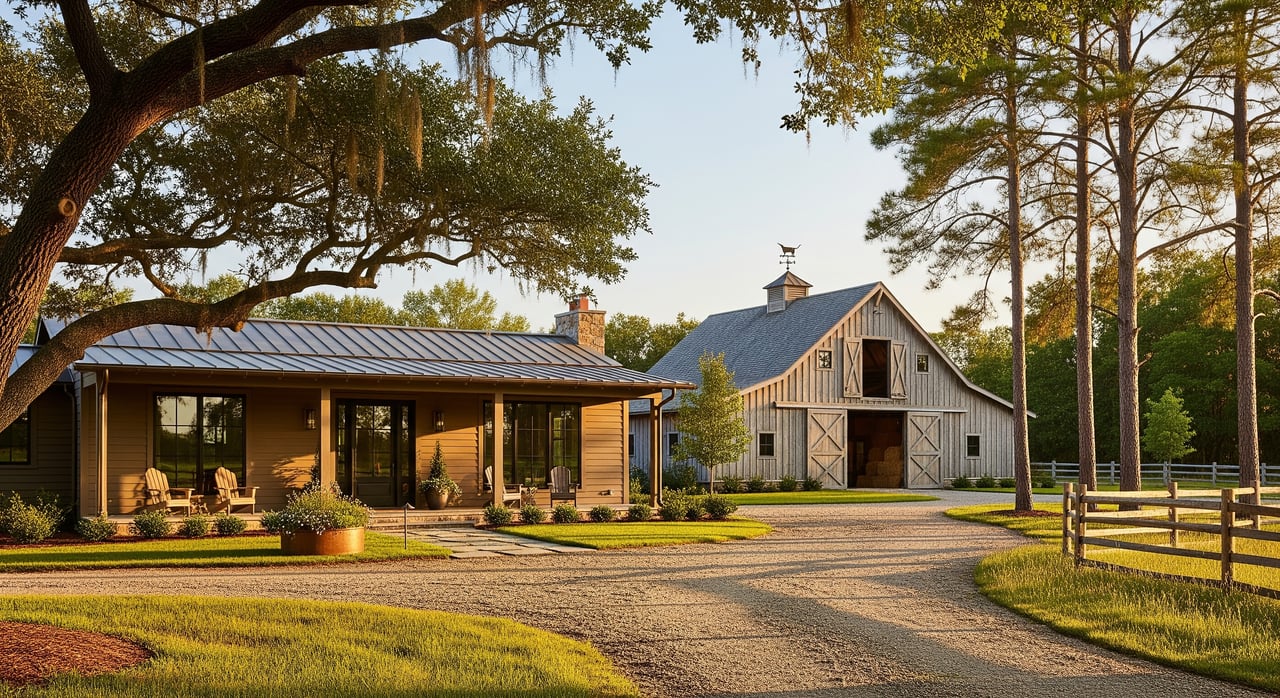
Acreage vs Master-Planned Living in Liberty County
January 15, 2026
January 15, 2026
Are you torn between wide-open space and walk-to-everything convenience in Liberty County? You are not alone. Choosing between acreage and a master-planned community is one of the biggest lifestyle decisions you will make. In this guide, you will learn how each option works, what it costs, how long it takes to build or move in, and what to check before you buy. Let’s dive in.
Acreage usually means one or more acres outside dense subdivisions. You get privacy, room for hobbies, and flexibility for outbuildings or animals where allowed by local code. Daily life can feel quieter and more independent.
Acreage also brings responsibility. You may manage your own water and wastewater, maintain a longer driveway, or pay to extend utilities. Emergency response and services can be farther away than they are inside neighborhoods.
Before you make an offer, confirm the parcel’s zoning, permitted uses, and any recorded covenants. Rural properties can include easements for utilities, pipelines, or shared driveways. Some parcels have mineral reservations or conservation restrictions. Get a plain-English overview of easements and CC&Rs from Nolo’s legal guides.
Also verify legal access. A recorded easement is different from a well-built, all-weather road. Inspect the route in person and review maintenance obligations before closing.
Master-planned communities offer coordinated neighborhoods with amenities like parks, trails, and pools. Homes run on central utilities and streets are engineered and maintained to community standards. Many buyers choose these areas for convenience and predictability.
There is also more structure. You will likely have a homeowners association that collects dues and enforces community rules. Design guidelines support a consistent look and feel, which can help with resale.
Most master-planned communities are governed by CC&Rs and an HOA or POA. Rules can cover exterior paint, fencing, outbuildings, parking, and landscaping. Ask for current CC&Rs, bylaws, fee schedules, and architectural review timelines before you buy. If there are bond districts or special assessments, get those details in writing.
Neighborhood streets, sidewalks, drainage, and street lighting are planned at the outset. Central water and sewer simplify maintenance and can speed up building timelines. Broadband and cell coverage are often stronger than in rural zones, though you should still verify service with providers.
Costs vary by parcel and neighborhood. Use this section as a framework for your budget and schedule.
Acreage upfront costs: Budget for surveying, soil and percolation tests, driveway and culvert construction, land clearing or grading, and utility extensions. Site work and distance to service lines are the big variables.
Master-planned upfront costs: Lots are typically “build ready” with utilities at the lot line. You still have closing costs, impact or connection fees, and any HOA transfer fees.
Financing: Land and construction loans work differently from standard mortgages. Start with mortgage basics at the Consumer Financial Protection Bureau. Ask lenders about land loans or a construction-to-permanent loan if you plan to build on acreage. Some rural homes may qualify for USDA Single Family Housing programs. FHA and VA may apply for completed homes that meet program standards.
Appraisal and resale: Acreage values hinge on usable acreage, access, and improvements. Master-planned homes often appraise more smoothly because of nearby comparable sales. For a sense of national demand patterns, explore the National Association of Realtors research library.
Insurance: Confirm wind, flood, and wildfire risk for any property. Flood requirements come down to the specific parcel, not just the zip code. Use the FEMA Flood Map Service Center to check a property’s zone.
Carrying costs: Acreage may qualify for certain agricultural tax exemptions if local rules allow and income or use standards are met. Master-planned homes have typical property taxes plus HOA dues. Some communities also have special districts that fund infrastructure.
Choosing between acreage and a master-planned neighborhood comes down to lifestyle, budget, time, and risk tolerance.
Ask yourself:
Every parcel is unique. Use this quick plan to gather local facts before you decide:
Both paths can be right. If you want privacy, space for hobbies, and the freedom to tailor your land, acreage may fit. If you want everyday convenience, finished amenities, and streamlined approvals, a master-planned community could be ideal. Clarify your priorities, verify local facts, and then tour options in person.
When you are ready to weigh trade-offs or explore specific parcels and neighborhoods in and around Liberty County, reach out to The Holly Jackson Team. Our team pairs hands-on land and neighborhood expertise with clear, step-by-step guidance so you can move forward with confidence.

Holly Jackson | Real estate Broker
Holly Jackson is passionate about helping clients navigate every aspect of real estate, from buying and selling homes to commercial and farm & ranch properties. Known for her dedication and personalized approach, Holly thrives on building relationships and guiding clients toward successful transactions. She looks forward to making your real estate journey seamless and rewarding.
The Holly Jackson Team is proud to be your local real estate connection in Southeast Texas. Based in Mont Belvieu, they know the area and its surrounding communities well. The're experienced, hardworking, and extremely proficient in all aspects of the buying or selling process.